


To celebrate its 55th anniversary, Star Trek: The Original Series has been re-released in a new Blu-ray steelbook set. Thanks to the work of production designers Michael and Denise Okuda, the remastered Star Trek: TOS features dazzling visual effects enhancing the look and feel of the original, classic 79 episodes produced by Gene Roddenberry. Michael and Denise Okuda have been vital members of the Star Trek franchise for decades, starting as art and production designers on Star Trek: The Next Generation, to working on the other Star Trek series and movies, the Roddenberry Vault, and Star Trek: Picard.
Screen Rant sat down with Michael and Denise Okuda to discuss their approach to remastering the original Star Trek's visual effects, their personal experiences with working for Gene Roddenberry on TNG, and their hopes for where Star Trek as a franchise will go in the future.
Star Trek: The Original Series is out now in a new steelbook Blu-ray set. Can you talk about your work in remastering The Original Series' visual effects?
Michael Okuda: We'd heard about it, and our friend Dave Rossi called and asked if we'd be willing to work on it. We are also big Star Wars fans but we weren't really crazy about the changes that had been made. So I said we'd rather not, but if you do it, here's how I think you should do it to try to keep it fresh but, most importantly, to respect the original work, the original designers, and the original fans. I talked for some time about it and finally, David said, "Mike, if you feel that strongly about it, come aboard and help out, otherwise, shut up." (laughs)
Denise Okuda: So we decided to work on it.
Michael Okuda: The entire CBS team respected the approach to, as much as possible, respect the work of the original artists. A little bit of a technical note: When you remaster the original Star Trek, the film is gorgeous. It was shot on fine grain, relatively low-speed film, and the colors, the saturation, and the detail is just stunningly beautiful. Except for the visual effects. The visual effects were made with what was, at the time, bleeding-edge visual effects technology. They used optical printers which used astonishing ingenuity to combine images on film, using bluescreen and all kinds of arcane technologies. The results made Star Trek an extraordinary visual experience for its time. But the inevitable consequence of these photochemical processes involves several generations of duplication, and the end result is inevitably fuzzier, softer, grainier, and more contrast-y than the rest of the film.
Much worse than that, the original film elements [like] the ships on stages, the animation for phaser beams, the planets, most of that film was lost. So you couldn't recomposite the film. So CBS decided they're gonna recreate, what they called "remastering," the series. With that came the decision that they wanted to freshen it up a bit. Now, what does 'freshen up a bit' mean? They wanted to keep the show relevant for new fans. So how do you tread that very difficult tightrope between keeping it fresh and respecting the original work? That was the main thing we tried to do.
Denise Okuda: It was difficult, too, because some of the artists recreating the visual effects really wanted to change it a lot. But Mike and I were militant that we should respect the original work. We did go and play outside then lines a couple of times but not anything that was too egregious.
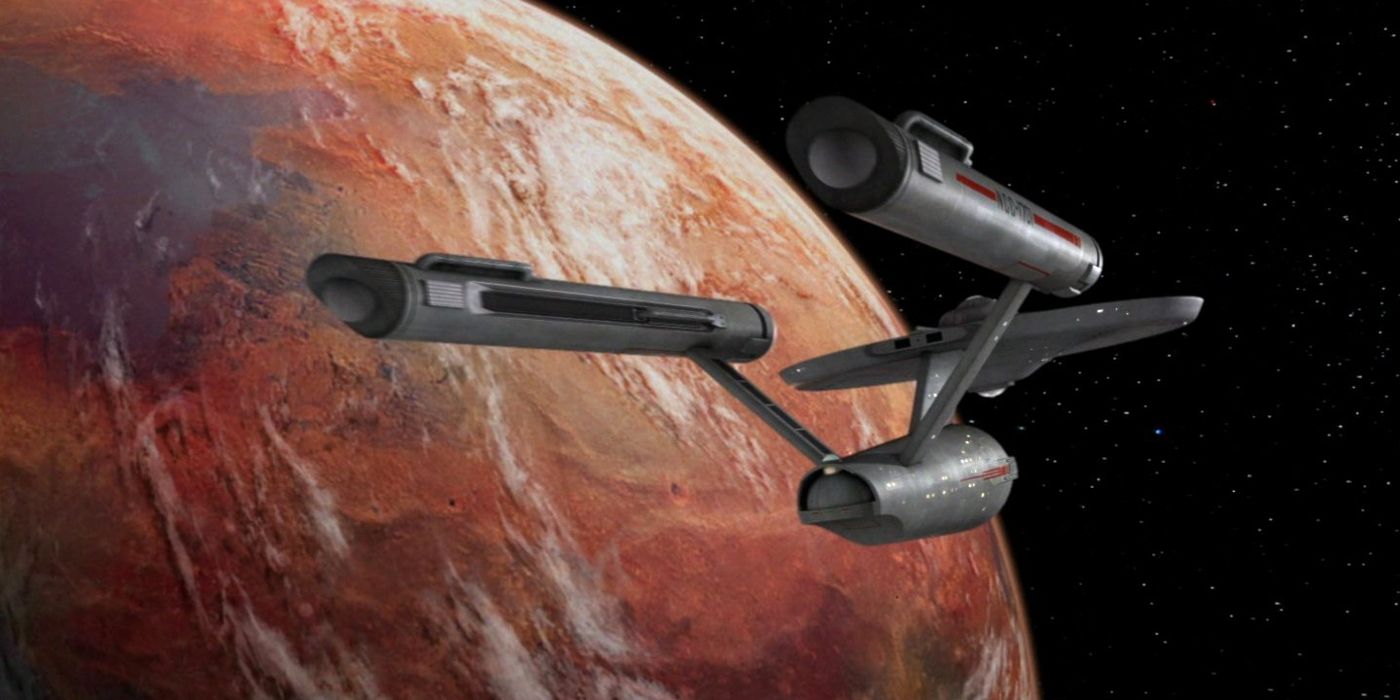
The remastered Star Trek: The Original Series just looks wonderful. The Enterprise, the planets, the backgrounds all look great. I still marvel at how well that show holds up. What do you feel makes the original Star Trek so enduring?
Denise Okuda: It always boils down to story and character. No matter what the window dressing is, it always boils down to story and character. The Original Series is timeless. It tells sweeping stories, it has amazing characters who have a chemistry that transcends years, and I think that's what really keeps it fresh, even 55 years later.
Michael Okuda: Gene Roddenberry went to extraordinary lengths to bring a sense of wonder into the show. He reached out to a lot of accomplished science fiction writers, people like Sam Peebles, Jerome Bixby, Richard Matheson, Ted Sturgeon, and, of course, Harlan Ellison. They brought an extraordinary vision to the show. But one thing that Roddenberry brought to the show was his desire to show a better tomorrow. To show that if we work together, if we're smart, if we're compassionate, we can reach for the stars and tomorrow can be a better place.
Do you have a favorite episode of TOS?
Denise Okuda: Yes. "Metamorphosis."
Michael Okuda: My favorite changes almost every time someone asks the question. (laughs) Right now, because we just saw it, it would have to be "The City on the Edge of Forever."
You both got to work with Gene Roddenberry. As the Star Trek franchise keeps getting bigger, the pool of people who can say they actually worked with Roddenberry is getting smaller. So much has been written and said about Gene but can you tell us about your personal experience with him?
Denise Okuda: When we both came to work on Star Trek [The Next Generation], we had almost idolized Gene Roddenberry because he put forth a philosophy that really spoke to us. When we were growing up, it really did change our lives. And then, to be working with someone that created that, you really had to hope that he was a nice guy. Thankfully, he was a nice guy. I mean, he was a businessman, he was a producer, he had a show to run, so it was business, too. But he was always very kind and supportive to us.
Michael Okuda: Roddenberry said in interviews [that] he deliberately cultivated a persona of being "prickly," of being a bit of a fighter so that people wouldn't muck with him. But I also think he did it as a bit of a defense mechanism. I remember during the early days of The Next Generation, some of my colleagues in the art department struggled to find designs that Gene would accept. The job of the producer isn't to tell you what it's going to be, it's to have a vision and then the designer comes up with things to try to fulfill that vision. I remember [my colleagues] spent literally weeks trying to find designs for the props.
For my work on the show, the first thing I really did was [design] the control panels on the bridge. At the time, graphics were considered very unimportant so it wasn't even important enough for me to go to the meetings at that point. Our art director had a meeting with Gene, and she took my designs [to him]. I had explained in excruciating detail why [my designs] weren't just functional and looked good, but also the production reasons why. Why this made sense for an episodic television show. I was sweating bullets. She walked across the lot and had a meeting. She came back and said, "I talked to Gene for two minutes and he said, 'Great. Go with it.'"
Obviously, I hoped that he reacted so positively because he liked the designs. But also, I think he knew that Denise and I were genuinely there for him and for his show. We were there to try to make his show look as good as it could be and as successful as it could be. And I think he trusted us. That's an immensely gratifying feeling because, as Denise said, we idolized the man growing up.
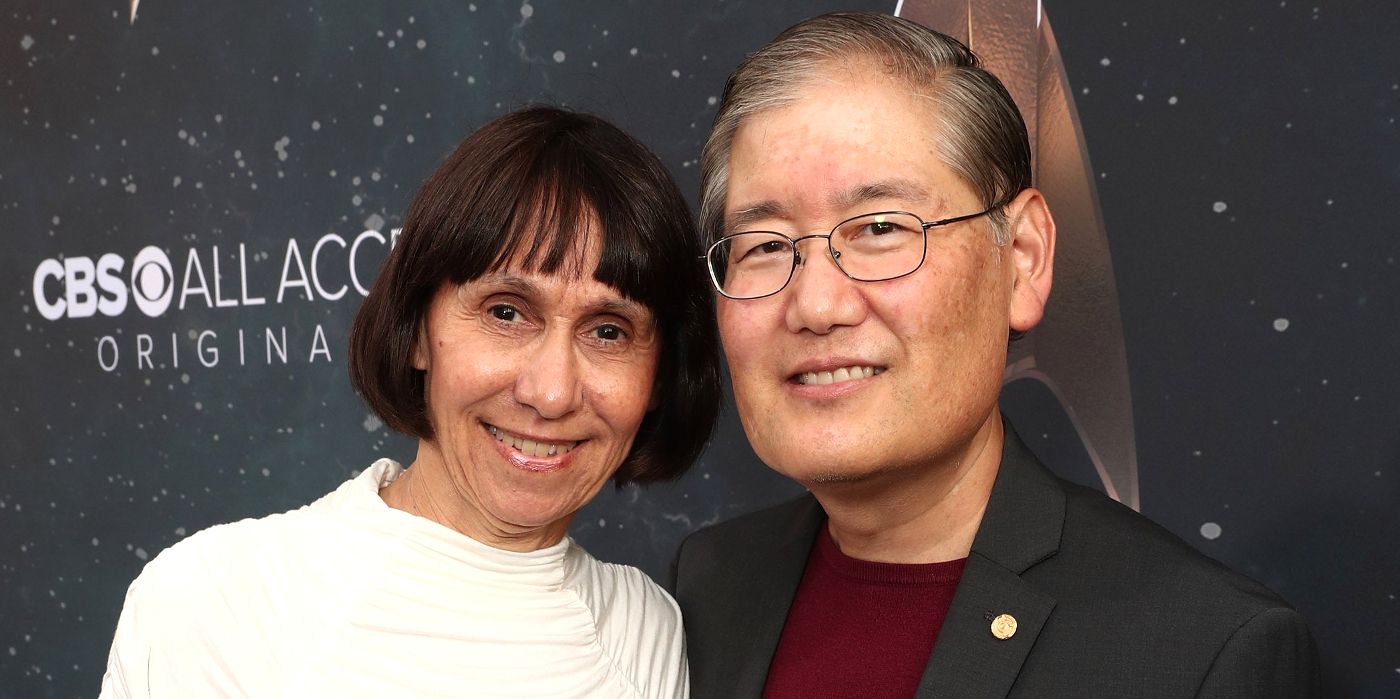
You’re both lifelong Star Trek fans who remain vital to the franchise. Star Trek is still going strong. What are your hopes for where Star Trek goes in the future?
Michael Okuda: After the Star Trek movies became successful, Roddenberry said, "I hope the shows continue without me." And Gene said, "I hope, someday, an equally talented group of filmmakers come in, do new adventures with Kirk and Spock or other characters." I think the best thing you can hope for is that Star Trek will continue, but not unchanged. That it will continue to tell stories that are appropriate and important to those future times.
Denise Okuda: I hope Star Trek continues for a very long time because it's necessary. It is necessary and hopeful to project the philosophy that Gene Roddenberry put forth of an optimistic and hopeful future. And it is sorely needed in this world. And so, I hope Star Trek continues as entertainment, but I hope that philosophy influences people so that we can have a better world.
https://ift.tt/3cgyJoI
November 16, 2021 at 12:03AM


